
Read Time (minutes)
5

Tai Chi: Building Strength, Balance and Confidence
Tai Chi is often described as "meditation in motion." Combining slow, flowing movements with controlled breathing and focused attention, it has become one of the most well-researched complementary therapies for persistent pain. For many people, it offers a gentle and enjoyable way to improve movement, balance, confidence and overall wellbeing.
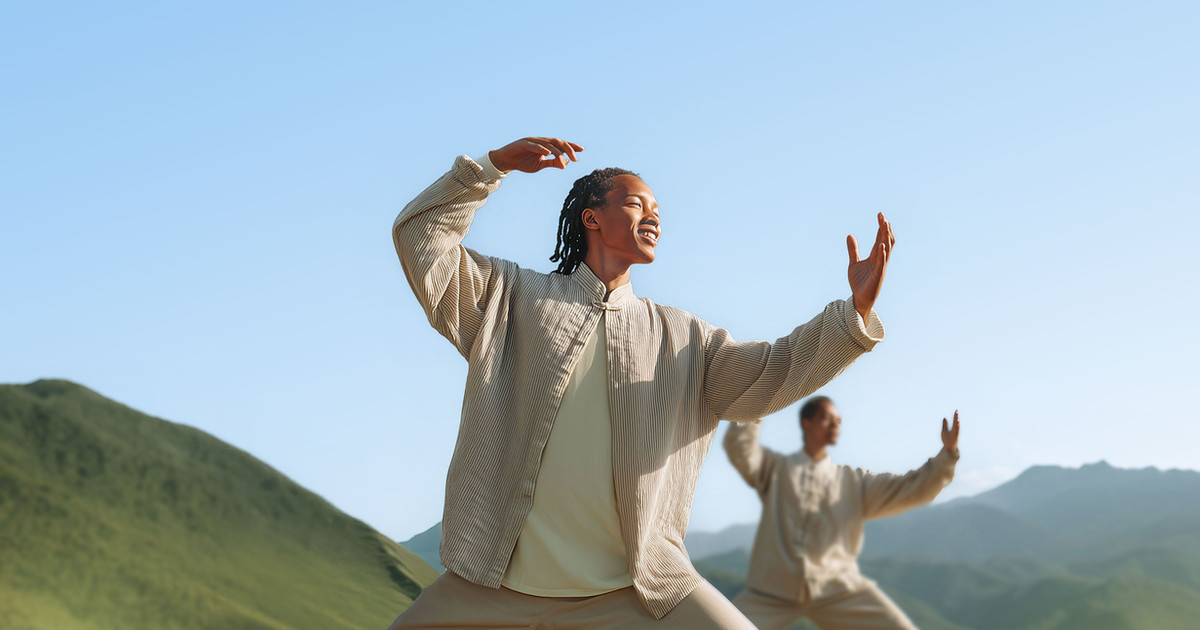
If you have ever walked through a park early in the morning, you may have seen a group of people moving slowly together in near silence. At first glance, it does not look like exercise. There are no heavy weights, no fast movements and very little sign of physical effort. Yet those gentle, flowing movements are challenging the body in ways that are remarkably well suited to people living with persistent pain.
Tai Chi has been practised for centuries, originally developing as a Chinese martial art before evolving into a widely recognised form of exercise for health and wellbeing. Today it is recommended around the world because it combines movement, balance, breathing and mindful attention into a single activity. Perhaps its greatest strength is that it asks very little of you to begin. You do not need to be fit. You do not need expensive equipment. You simply begin moving.
Why Tai Chi works so well
Persistent pain rarely affects only one part of your life. It often reduces confidence, interrupts sleep, limits activity, and gradually changes the way you move. Tai Chi addresses many of these challenges at the same time.
The movements are slow enough that you have time to think about how your body is moving. Your balance is constantly challenged in gentle, controlled ways. Breathing becomes slower and more relaxed, helping calm the nervous system, while your muscles steadily become stronger through repeated weight shifting and controlled movement. Rather than focusing on a single painful body part, Tai Chi encourages your whole body to move together, creating for many people a very different experience of movement, one based on confidence rather than caution.
More than exercise
One reason Tai Chi has become so popular is that people often continue practising it long after formal rehabilitation has finished, because it rarely feels like exercise in the traditional sense. Many participants describe it as relaxing, enjoyable and social; others appreciate the chance to spend time outdoors or connect with a local community group. Those experiences matter. One of the biggest predictors of long-term success with any exercise program is whether you enjoy it, because if movement feels rewarding you are much more likely to continue, and it is consistency that produces lasting benefits.
What the research tells us
Among complementary physical therapies, Tai Chi has one of the strongest evidence bases. Research has shown that regular practice can improve pain and physical function for people with osteoarthritis, particularly of the knees and hips. Studies have also demonstrated benefits for people living with chronic low back pain and fibromyalgia, while its effects on balance and falls prevention are among the strongest of any community-based exercise program.
Participants frequently report improvements beyond pain alone: better balance, greater confidence walking, improved sleep, reduced stress, and more enjoyment of movement. These outcomes are important, because successful pain management is measured by improvements in function and quality of life, not simply changes in pain intensity.
Is Tai Chi right for everyone?
Like any form of exercise, Tai Chi is not the perfect choice for every person. Some people prefer walking, swimming or strength training; others enjoy the structure and pace Tai Chi provides. The important point is that it does not have to replace other forms of movement. It can complement them, and many people combine Tai Chi with walking, strengthening exercises or Pilates, creating a varied routine that develops fitness, flexibility, balance and confidence together.
Taking the first step
Beginning something unfamiliar can feel intimidating, but Tai Chi is one of the most accessible forms of exercise available. Most classes welcome beginners and progress gradually, letting you learn movements at your own pace, with no expectation that you remember every sequence or perform every movement perfectly. Your first class is not about mastering Tai Chi. It is simply about discovering another way to move, and sometimes that first gentle step is all that is needed to begin seeing your body in a different light.
Is there a gentle, enjoyable form of movement, in a group or outdoors, that you would actually look forward to? Enjoyment is one of the strongest predictors of whether you will keep it up.
KEY TAKEAWAY
Tai Chi combines gentle movement, breathing and mindful attention, and has one of the strongest evidence bases among complementary therapies for persistent pain. Regular practice improves balance, movement confidence, function and wellbeing, and it complements other approaches rather than replacing them.
Where to next
Book a Free Navigation Call
Explore Coaching
Clinician Consultation


Authour
Pain Education and Management (PEM)
Last Evidence Review
2 July 2026
Pain Pal provides educational support only and does not replace medical advice, diagnosis or treatment. Always consult your healthcare professional regarding your individual circumstances. In an emergency, call 000.