
Read Time (minutes)
5

Understanding Acupuncture
Acupuncture is one of the most widely recognised complementary therapies for persistent pain, yet also one of the most misunderstood. While its traditional origins are thousands of years old, modern research has shown it can provide meaningful relief for some pain conditions. Understanding what the evidence says, and what it doesn't, can help you decide whether acupuncture has a place in your rehabilitation.
Few treatments generate as many different opinions as acupuncture. Some people describe it as life-changing. Others remain deeply sceptical. Many simply are not sure what to believe. That uncertainty is understandable, because acupuncture sits at the intersection of traditional practice and modern science, and both have influenced the way it is understood today.
Rather than asking whether acupuncture is "real" or "does it work?", a more useful question is: for which people, and for which conditions, is acupuncture most helpful? That is exactly what the research has tried to answer.
What acupuncture is
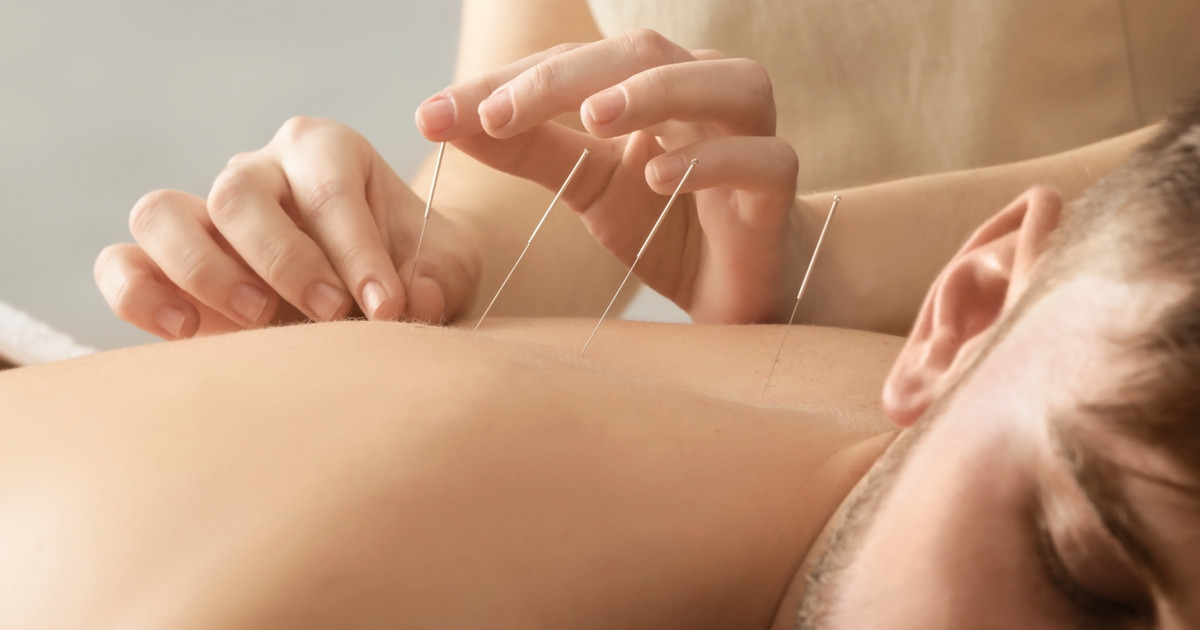
Acupuncture involves placing very fine needles into specific points on the body. Although many people worry this will be painful, the needles are much thinner than those used for injections, and most people describe little more than a slight prick, followed by a feeling of warmth, heaviness or a dull ache around the needle. Treatment usually lasts between 20 and 30 minutes while the needles remain in place, and depending on the practitioner's approach, it may be combined with advice about movement, exercise or other aspects of your rehabilitation.
What the research tells us
Acupuncture has been studied extensively over the past several decades. The strongest evidence supports its use for several common musculoskeletal conditions, including persistent low back pain, neck pain, knee osteoarthritis, and some types of headache, particularly migraine and tension-type headaches. For these conditions, many people experience worthwhile improvements in pain and function, particularly over the short to medium term.
The evidence for other conditions, such as fibromyalgia, is less consistent. Some people report significant benefit, while others notice little difference. This reminds us of something that applies throughout pain management: not every treatment works equally well for every person.
How it helps
Exactly how acupuncture works remains an area of ongoing research. Traditional Chinese Medicine explains it through concepts such as energy flow and meridians, while modern science has explored different explanations, including changes within the nervous system, the release of natural pain-relieving chemicals, and local responses within muscles and connective tissue. Although researchers continue to investigate the precise mechanisms, one thing has become increasingly clear: many people experience genuine clinical improvement following acupuncture. Ultimately, understanding every biological mechanism is less important than understanding when acupuncture may be a reasonable option within a broader rehabilitation program.
It isn't an alternative to rehabilitation
One of the most important things to understand about acupuncture is that it works best as part of a comprehensive approach. Many people find that treatment reduces pain enough to make walking, strengthening exercises or daily activities easier, and that creates an opportunity: an opportunity to move more, rebuild confidence, and continue progressing with the active rehabilitation strategies that produce long-term change. Like massage or osteopathy, acupuncture is often most valuable because it helps you engage more effectively in the things that build lasting recovery.
Choosing a qualified practitioner
If you decide to explore acupuncture, choosing an appropriately qualified practitioner is important. In Australia, acupuncture may be provided by registered Chinese Medicine practitioners, as well as some physiotherapists, medical practitioners and other health professionals who have completed recognised acupuncture training. Whatever their professional background, your practitioner should be happy to explain why they believe acupuncture is appropriate, what you can realistically expect, and how it fits within your overall rehabilitation plan. Good practitioners encourage questions, and they encourage you to remain an active participant in your own recovery.
Another tool in the toolbox
Acupuncture is not something you have to believe in, nor is it something everyone needs to try. For some people it becomes an important part of managing persistent pain; for others, different approaches are a better fit. The goal is not to find the one treatment that does everything. It is to build a collection of strategies that work together to help you move more comfortably, take part more fully, and live the life you want. If acupuncture helps you achieve those goals, then it has found its place within your rehabilitation.
Rather than asking "does acupuncture work?", a more useful question is "could it help me do something specific, move more, sleep better, that I've been struggling with?" What would that thing be for you?
KEY TAKEAWAY
Acupuncture has good evidence for several persistent pain conditions, including back pain, neck pain, osteoarthritis and some headaches, though the evidence is less consistent for others such as fibromyalgia. Generally well tolerated and often helpful in the short to medium term, it works best combined with active rehabilitation and a qualified practitioner.
Where to next
Book a Free Navigation Call
Explore Coaching
Clinician Consultation


Authour
Pain Education and Management (PEM)
Last Evidence Review
2 July 2026
Pain Pal provides educational support only and does not replace medical advice, diagnosis or treatment. Always consult your healthcare professional regarding your individual circumstances. In an emergency, call 000.